Infrared Roof Moisture Surveys
See the water you cannot see. Infrared roof moisture surveys for NC commercial buildings.
- Firestone Master Contractor
- BBB A+ · Licensed & insured
- After hours: 866-829-7663
An infrared roof survey uses thermal imaging, typically at dusk, to locate wet insulation beneath a roof membrane. Wet insulation holds daytime heat longer than dry insulation and shows as warm areas on the thermogram. Statesville Roofing uses infrared surveys to scope repairs, verify coating candidates and support due diligence across North Carolina.
You cannot see wet insulation from the roof surface, and a leak's entry point can be far from the interior stain. Infrared thermography shows exactly where moisture has collected so repairs are targeted and replacement scopes are based on data, not guesswork.
We verify infrared findings with core cuts and moisture meter readings, then mark the wet areas on the roof and on a plan so the results are actionable.
When an infrared survey pays for itself
- Before a coating or restoration project, to confirm the roof qualifies
- Recurring leaks that repairs have not solved
- Before purchasing or refinancing a building
- Scoping a replacement: replace only the wet insulation, recover the rest
- Baseline documentation for a new maintenance program
- After storm or hail events for insurance claims
What the survey includes
- Dusk or nighttime thermographic scan of the full roof area
- Verification core cuts and moisture meter readings
- Wet areas marked on the roof for repair crews
- Roof plan with wet-area locations and square footage totals
- Written report with thermograms, photos and recommendations
- Repair or replacement scope and pricing derived from the findings
Infrared SurveysWhat you get with Statesville Roofing
Replace only what is wet
Data-driven scopes often cut replacement area and cost substantially compared with assumptions.
Find hidden leaks
Locate water entry points that visual inspection misses.
Protect a coating investment
Never coat over wet insulation. The survey is the safeguard.
Documentation
Reports support insurance claims, due diligence and capital planning.
Our four-step process
The same process behind more than 98,000 service projects since 1989. No surprises, no pressure, everything in writing.
Consultation
Tell us what you are seeing and when you need it handled. A project manager, not a call center, calls you back.
Inspection
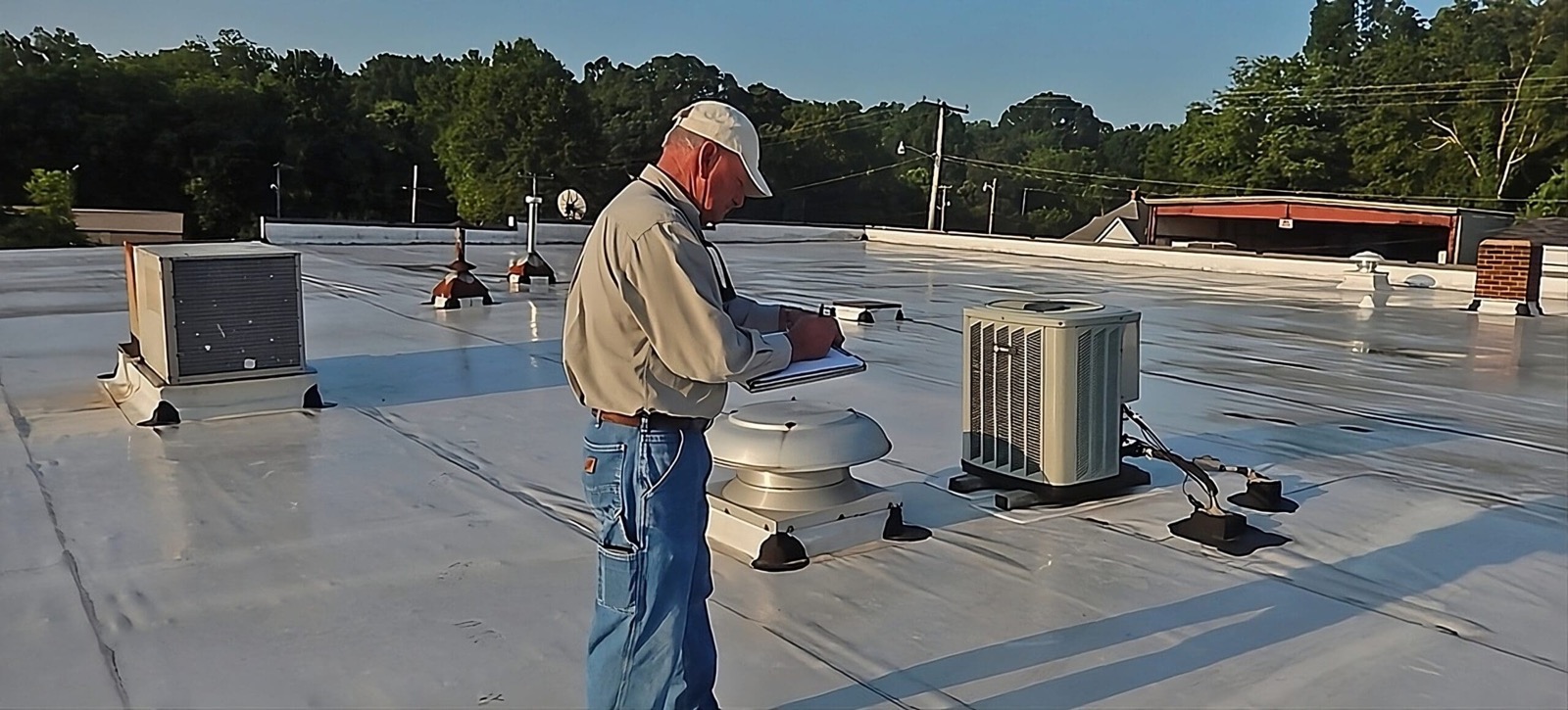
A technician scans the roof after sunset when temperature differentials are greatest, then verifies anomalies with core cuts and meter readings.
Proposal
You receive a report with thermograms, a marked roof plan, wet square footage and a recommended repair or replacement scope with pricing.
Work & Quality Check
Identified wet areas are removed and replaced, leak sources repaired, and the roof is ready for coating, recover or continued maintenance.
Infrared Surveys questions, answered
How does an infrared roof survey work?
Wet insulation absorbs more heat during the day and releases it more slowly at night. A thermal camera detects those warmer areas after sunset. We confirm with core samples and moisture meters.
Can infrared find every leak?
It finds moisture trapped in insulation, which points to the entry area. It works best on roofs with absorbent insulation such as polyiso, fiberboard or perlite, and less well on ballasted or inverted roofs.
How much roof area can be surveyed in one night?
Several hundred thousand square feet under good conditions. Surveys are weather-dependent and scheduled for clear, dry evenings.
Often paired with Infrared Surveys
Request an Infrared Surveys inspection
Two quick steps. A project manager calls you back, typically within one business day, to schedule a site visit.
- Inspections for most projects are at no cost
- Written proposal with options and pricing
- Family-owned and North Carolina-based since 1938
- Emergency response available 24/7
Are you ready to be WeatherReady™?
You deal with enough surprises. Your roof does not have to be one of them.